
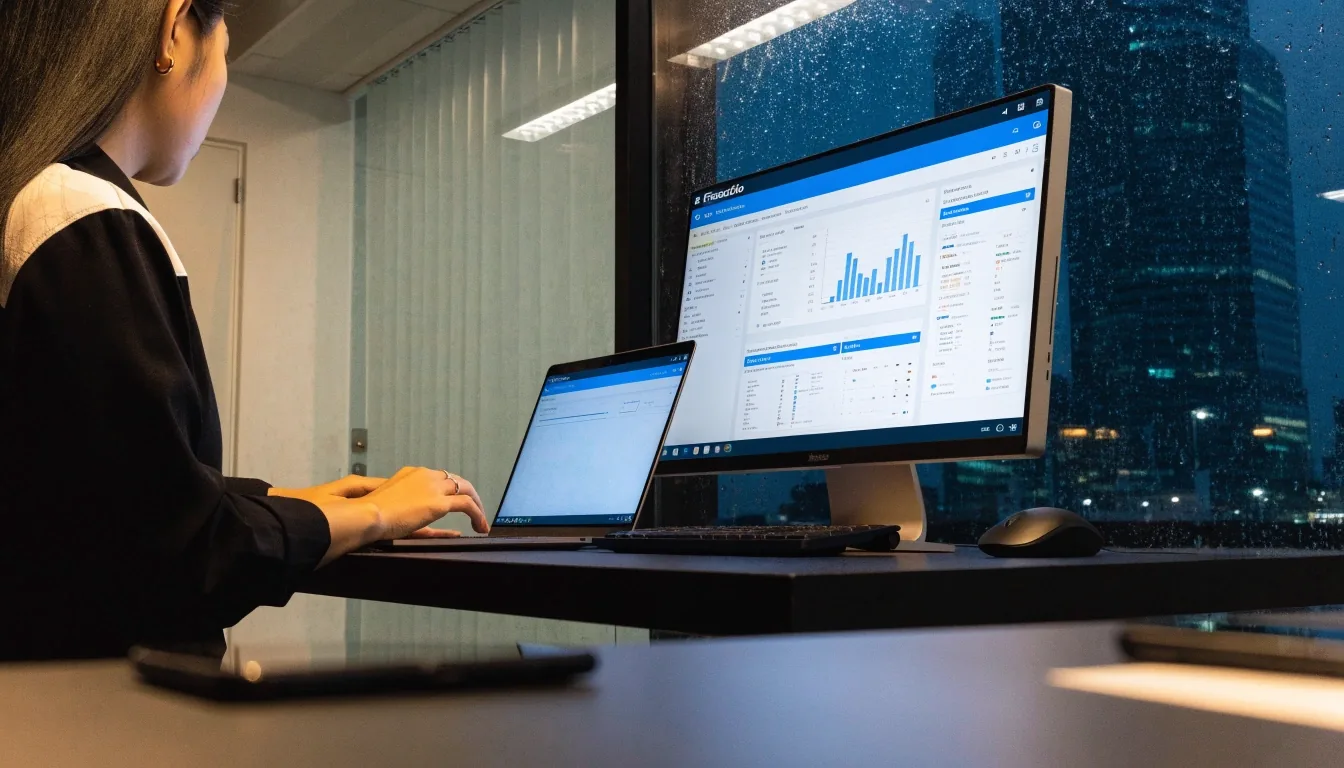
E-invoicing on the Peppol network
E-Invoicing in Singapore with InvoiceNow
InvoiceNow is Singapore's e-invoicing network, built on the Peppol standard, and it changes how invoices move between businesses. Instead of PDFs by email, invoices travel as structured data that can flow directly into accounting systems. This page explains how the network works, what integration involves, and how to tell whether your software supports it.
The network
What InvoiceNow actually is
InvoiceNow is a nationwide e-invoicing network that lets businesses send and receive invoices in a standardized structured format. The standard behind it is Peppol, which is used across multiple countries, so the format is not Singapore-only.
The practical difference from emailing a PDF is that the receiving system can read the data without retyping. That removes manual entry on both sides of the transaction, and it leaves a cleaner audit trail than a mailbox of attachments.
For a Singapore business, the useful way to think about it is this: the invoice stops being a document you send and becomes a record both systems already agree on.
PDF versus structured
Why structured invoices beat PDFs

Routing
How the network routes an invoice
An invoice is sent through an access point, which routes it to the recipient's access point based on their Peppol identifier. The recipient's system receives it and can accept or reject it automatically.
Both sides need to be connected
This is why the full benefit arrives when your customer is on the network too. One connected party alone does not complete the route.
The fallback is not a failure
If your customer is not connected, you fall back to a PDF or another method. That is normal, and worth building into your process on purpose.
Plan for a mixed approach
Adoption is growing, but it is not universal. Treating connected and unconnected counterparties as two lanes keeps your records straight.
What software integration involves
Integration means your accounting platform connects to the network through an access point, either its own or a partner's. In practice you raise the invoice in your software, mark it for InvoiceNow, and the platform handles transmission. Incoming invoices appear in your system ready for processing.
One thing worth asking up front: whether the integration is native to the platform or added through a third party.
Before you commit
Checking InvoiceNow support before you buy
Not every accounting product on the Singapore market connects to InvoiceNow, and among those that do, support can vary by plan tier. A feature page mentioning e-invoicing is not the same as a live InvoiceNow integration.
- Ask the vendor directly whether the version you are buying includes it — not the product family, the plan.
- Ask who the access point provider is, and whether the integration is native or routed through a partner.
- Ask what happens if the connection fails mid-month — who you contact, and how the invoice still reaches the customer.
- Check the IRAS materials on the network yourself, so the vendor's answer and the published guidance line up.
Verifying takes one email and saves a migration. The comparison page below sets out which platforms connect and how.
What it means for your records
Invoices received through the network arrive as data, which means your records are more consistent than a folder of PDFs. That helps at year end and if IRAS requests documentation.
It also helps with GST preparation, since the invoice data is already structured and categorized. The record-keeping benefit is quieter than the time savings but often more valuable over several years. Clean records reduce the effort of any future query.
Also worth knowing
InvoiceNow is a network and a data standard, not an accounting platform. You still need bookkeeping software for your records, GST preparation and reporting — the network changes how invoices move, not how your books work.
Common rollout problems
The most frequent issue is a customer who is not on the network yet, which means running two processes in parallel. The second is identifier setup, which takes coordination with the other party and can stall. The third is expecting full automation immediately when some invoices still need manual review.
Starting with your highest-volume counterparties
The sensible rollout is to start where volume is highest. If three customers account for most of your invoices, getting those connections live delivers most of the benefit. Then extend to suppliers, where incoming structured invoices reduce your processing work.
This staged approach avoids a big-bang migration and lets you fix problems while the scope is small. It also gives you a working example to show other counterparties — which is usually what convinces the next one to connect.
Official registration and support
Biskovia guides Singapore businesses through cloud accounting software with official registration and ongoing support, from the first invoice to the year-end file. If you are weighing platforms, the comparison page sets out what each one supports.
Office
8 Marina Boulevard, Marina Bay Financial Centre Tower 1, Singapore 018981, Singapore
Monday to Friday, 9:00 AM – 6:00 PM (SGT)
A staged rollout, in order
-
Step 1
Connect your three highest-volume customers first.
Most of the benefit sits here, and the scope stays small enough to fix problems quickly.
-
Step 2
Extend to your main suppliers.
Incoming structured invoices cut your own processing work, so this side pays back even before your customers all connect.
-
Step 3
Keep both lanes running until the network side takes over.
Running the network route and the PDF route side by side is normal during the transition, and it keeps customer expectations intact.
-
Step 4
Review the mix each quarter.
As more trading partners connect, shift volume across. Check that your software plan still covers the integration as you scale.
Questions
InvoiceNow, answered plainly
Four questions that come up before most Singapore businesses commit to e-invoicing.
Is InvoiceNow mandatory for Singapore businesses?
It is not currently mandatory for all businesses, though adoption is encouraged and some government-related transactions involve e-invoicing requirements. Check the current rules for your situation, since requirements have been extended in stages. Many businesses adopt it for the operational benefit rather than a mandate.
Can I use InvoiceNow if my customers are not on the network?
Yes, but those invoices will not travel through the network. You would send them by your usual method while the network handles connected counterparties. This mixed approach is common during the transition period. Over time, more of your trading partners are likely to connect.
Does InvoiceNow replace my accounting software?
No. InvoiceNow is a network and a data standard, not an accounting platform. Your accounting software connects to it through an access point. You still need bookkeeping software for your records, GST preparation, and reporting. The network changes how invoices move, not how your books work.
How do I know if my accounting software supports InvoiceNow?
Ask the vendor whether the specific plan you are buying includes a live InvoiceNow integration, and whether it is native or through a partner access point. Check the IRAS materials on the network as well. A general mention of e-invoicing on a feature page is not confirmation of network support.
Ready to move invoices off email
Whether you are choosing software, preparing for GST, or mapping your payroll and bookkeeping workflows, there is a page for the next question. If your situation is specific, call or email and we will point you at the right one.
Biskovia, Singapore
8 Marina Boulevard, Marina Bay Financial Centre Tower 1, Singapore 018981, Singapore
Business phone: +65 6295 0068
Monday to Friday, 9:00 AM – 6:00 PM (SGT)